Western Sahara: Washington is quietly accelerating the restructuring of the issue
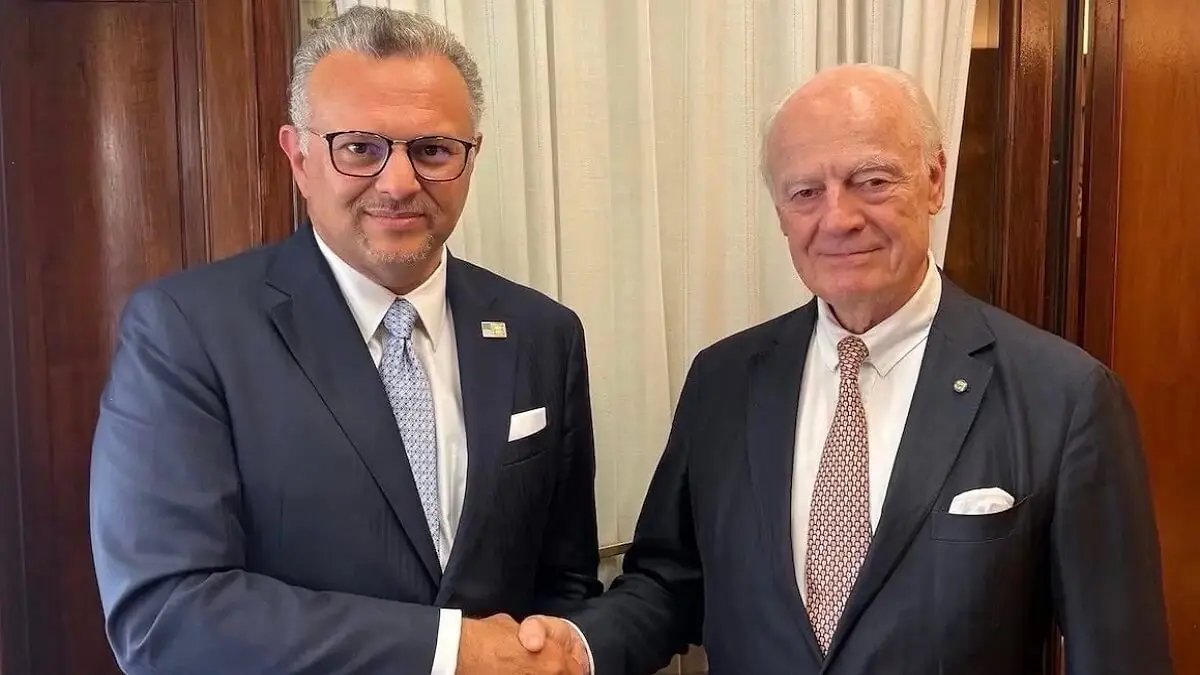
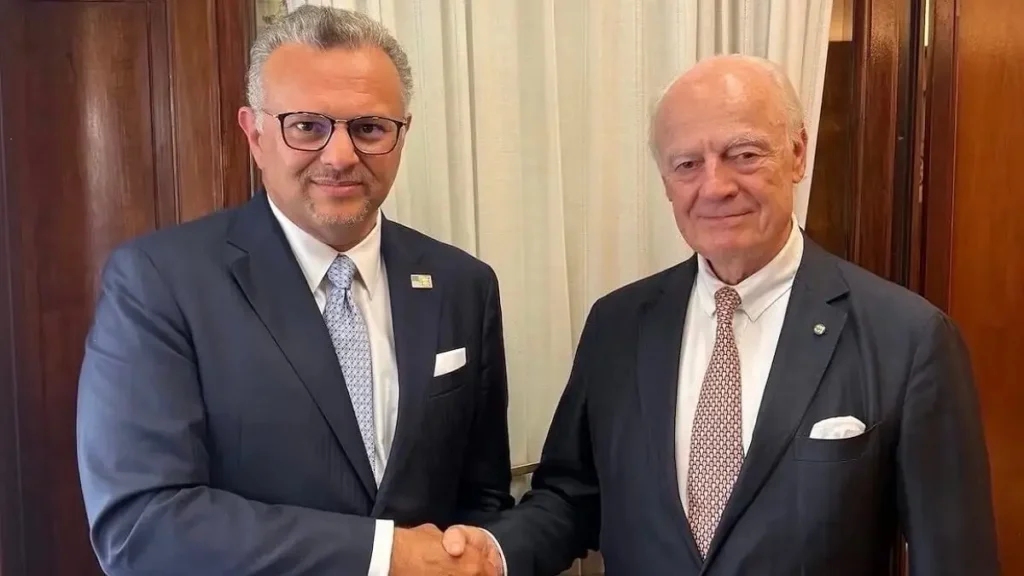
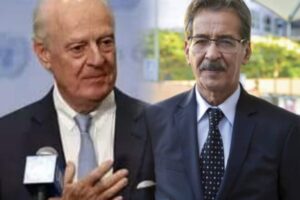
The UN Secretary-General’s Personal Envoy for Western Sahara, Staffan de Mistura, and the US President’s Senior Advisor for Africa, Massad Boulos – Photo: Social Media
Amid military escalation, chaos in the Sahel, and a realignment of Sahrawi voices, the process set in motion by Resolution 2797 is entering its most sensitive phase
Since the adoption of Security Council Resolution 2797 on October 31, 2025, the Western Sahara issue appears to be entering a new diplomatic phase in which the United States now occupies a central position.
Discreet consultations between Washington, Madrid, and several regional capitals reveal a U.S. desire to reach a definitive political solution before the crucial deadline of October 2026, the date of the next renewal of MINURSO’s mandate.
For many observers, this dynamic marks a major strategic shift: the framework of the negotiations is no longer centered on a referendum on self-determination, but on a formula for autonomy under Moroccan sovereignty presented as the most realistic and immediately implementable option.
Resolution 2797: A Historic Diplomatic Turning Point
Resolution 2797 represents an unprecedented turning point in the international management of the conflict. For the first time, the Security Council explicitly considers the Moroccan autonomy plan as “the basis for a just, lasting, and mutually acceptable settlement,” noting that “genuine autonomy under Moroccan sovereignty could be one of the most realistic solutions.”
The diplomatic message is now clear: Washington is gradually establishing itself as the primary mediator in the matter, with an approach based on accelerating negotiations and seeking a definitive political compromise within a relatively short timeframe.
This shift significantly reduces the scope for the referendum option that had shaped the UN process for over three decades.
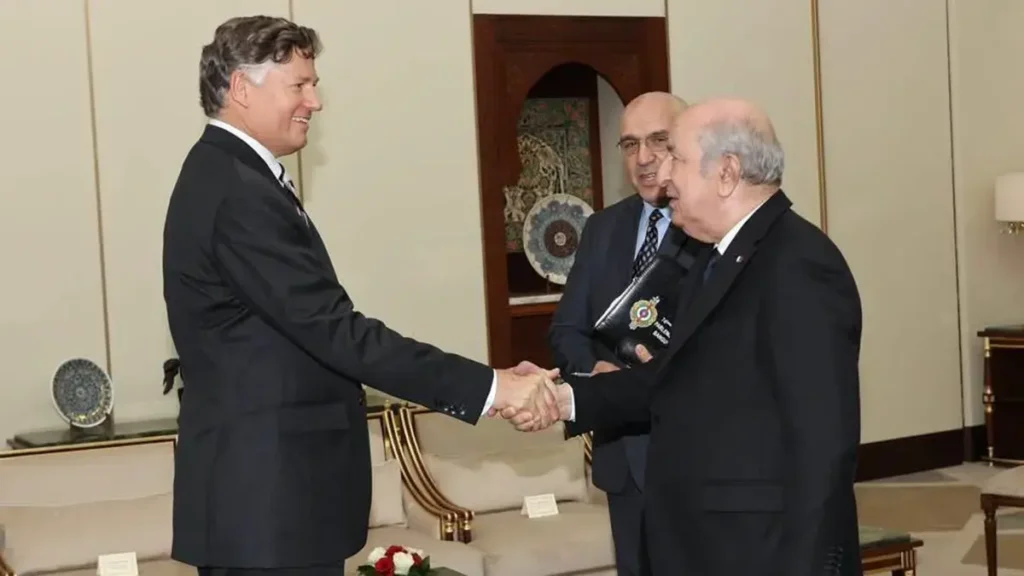
US Under Secretary of State Christopher Landau and Abdelmadjid Tebboune, President of Algeria – Photo: US Embassy in Algeria/X/@USEmbAlgiers
The Smara Attack: The Return of the Military Factor
Just as diplomatic discussions seemed to be gaining new momentum, on May 5, 2026, the Polisario Front claimed responsibility for a rocket attack on the city of Smara, in the area controlled by Morocco. The rocket fire targeted areas near the prison and the cemetery, injuring one person.
This attack provoked an unusual international reaction. For the first time, the United States, France, and the European Union publicly condemned a military action by the Polisario.
Washington stated that “these acts undermine peace efforts and threaten regional stability,” directly linking this condemnation to the momentum created by Resolution 2797.
The UN Secretary-General’s Personal Envoy, Staffan de Mistura, also expressed his “deep concern,” stating that “this must be a time for dialogue, not military escalation.”
In several diplomatic circles, this attack is interpreted as an attempt to disrupt a political process that is gradually reducing the Polisario’s military and diplomatic room for maneuver.
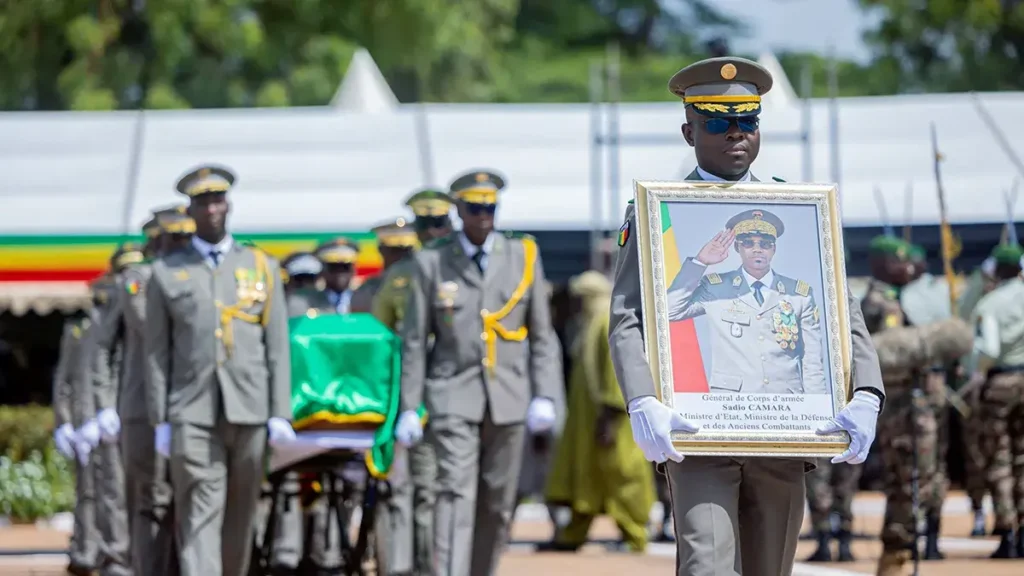
A framed portrait and the coffin of Malian Defense Minister Sadio Camara, who died in a terrorist attack, are displayed on the day of his state funeral in Bamako. Mali, April 30, 2026 – PHOTO/ Presidency of Mali via Facebook / via REUTERS
The Sahel in flames: an explosive regional environment
This escalation comes amid a particularly unstable regional context.
The coordinated attacks carried out in late April 2026 in Mali by JNIM and the Azawad Liberation Front against Bamako, Gao, Kati, Mopti, and Sévaré demonstrated the growing capacity of armed groups to operate across a vast Sahel-Saharan region.
The death of Malian Defense Minister Sadio Camara has reinforced the impression of a major security shift across the entire region.
In this context, the Western Sahara conflict can no longer be analyzed in isolation. The boundaries between armed separatist movements, jihadist groups, cross-border trafficking, and geopolitical tensions are becoming increasingly porous.
The attack on Smara thus occurs in a regional environment where the risks of security contagion are now taken very seriously by Western powers.
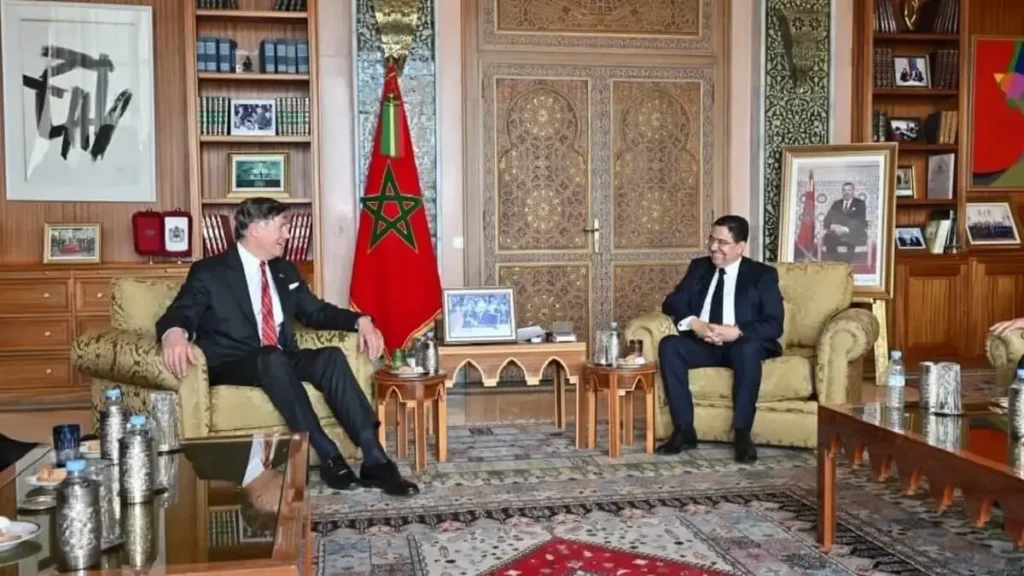
US Deputy Secretary of State Christopher Landau with Moroccan Minister of Foreign Affairs, African Cooperation and Moroccans Living Abroad, Nasser Bourita
The U.S. Strategy: Toward a New Regional Architecture
Since the U.S. recognized Moroccan sovereignty over the Sahara in December 2020, the United States has gradually moved away from an observational stance to adopt a more direct diplomatic leadership role.
The Trump administration now appears to favor a strategy of rapid regional stabilization based on several pillars:
– strengthening the strategic partnership with Morocco;
– reducing areas of tension in the Maghreb;
– preventing jihadist expansion in the Sahel;
– streamlining costly UN operations;
– regional security integration under Western supervision.
In this context, MINURSO could undergo a significant transformation. Resolution 2797 already provides for a strategic review of the mission’s mandate, with the possibility of reducing its personnel and operational costs.
A diplomatic dynamic that remains fragile
Despite the optimism expressed by some U.S. officials, several factors continue to undermine the process.
The first concerns the absence of a clear mechanism for consulting the Sahrawi population, particularly those living in the Tindouf camps.
The second lies in the hardening of positions. The Polisario categorically rejects any solution imposed based on the Moroccan autonomy plan, viewing Resolution 2797 as a dangerous departure from the historic UN framework.
Finally, the persistent tensions between Morocco and Algeria complicate any prospect of a lasting settlement. Algiers continues to officially defend the principle of self-determination and remains a key player in any regional solution.
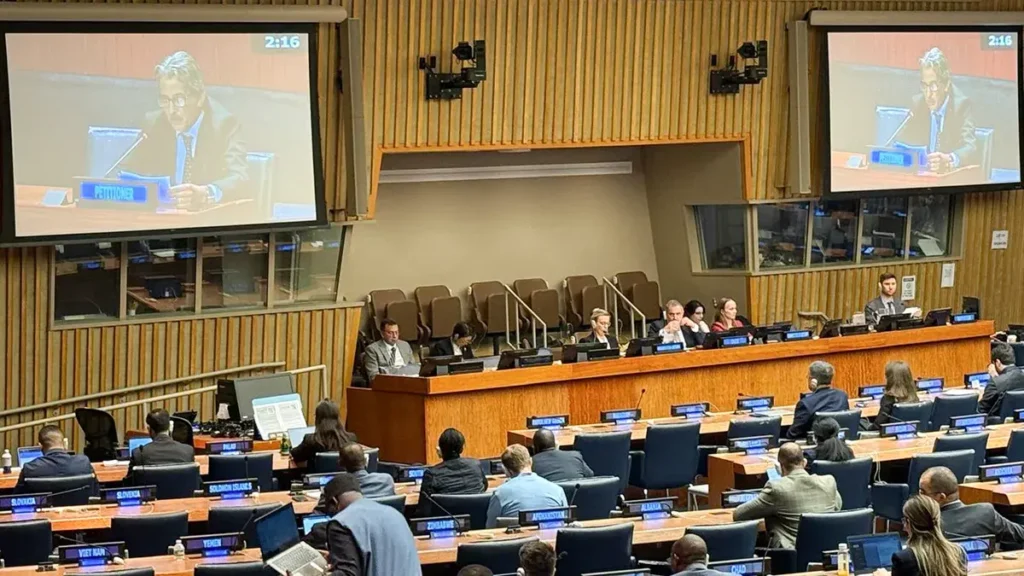
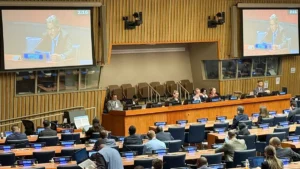
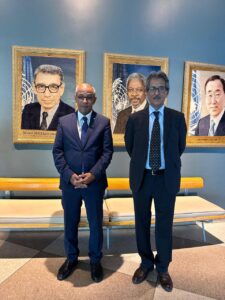
Remarks by Hach Ahmed Bericalla, First Secretary of the Sahrawi Movement for Peace (MSP), during the Fourth Committee of the United Nations – Photo: ATALAYAR
The Emergence of the MSP: A Third Sahrawi Path
Against this backdrop of growing polarization, a new actor is gradually gaining visibility: the Sahrawi Movement for Peace (MSP).
The movement advocates a different approach to the conflict, based on a negotiated political solution, the rejection of military escalation, and the opening of direct dialogue among Sahrawis, moving away from the logic of armed confrontation inherited from the Cold War.
The MSP believes that the continuation of the conflict in its current form further destabilizes the Sahrawi population and exposes the entire Sahel-Saharan region to major security risks.
Unlike maximalist approaches, the movement promotes a pragmatic vision centered on:
– regional peace;
– security stability;
– genuine representation of the Sahrawi people;
– negotiated autonomy guaranteeing dignity, local governance, and political participation.
For many observers, the MSP now embodies the emergence of an alternative Sahrawi voice—one that is less ideological and more oriented toward a realistic solution compatible with the new regional and international geopolitical realities.
In Western diplomatic circles, some now believe that this trend could play an increasingly significant role in future negotiations, particularly because it seeks to reconcile regional stability with Sahrawi political expression outside a strictly military framework.
Toward a tipping point before October 2026
The 2025–2026 period could thus represent a true tipping point in the Western Sahara issue.
Washington appears to be gradually preparing international opinion for a major diplomatic acceleration ahead of the next Security Council resolution scheduled for October 2026.
However, the escalating tensions in the Sahel, the Polisario’s military radicalization, and the absence of a solid regional consensus maintain a high level of uncertainty.
The main challenge for international actors will now be to prevent a solution perceived as imposed from causing new regional rifts.
In this complex equation, the emergence of Sahrawi actors in favor of a negotiated political solution, such as the MSP, could constitute a new factor capable of gradually shifting the balance of the issue and paving the way for a more diverse, pragmatic Sahrawi representation that is more focused on regional stability and lasting peace.



Post Comment